
Thought For The Day – Monday 20th October 2025
Diwali
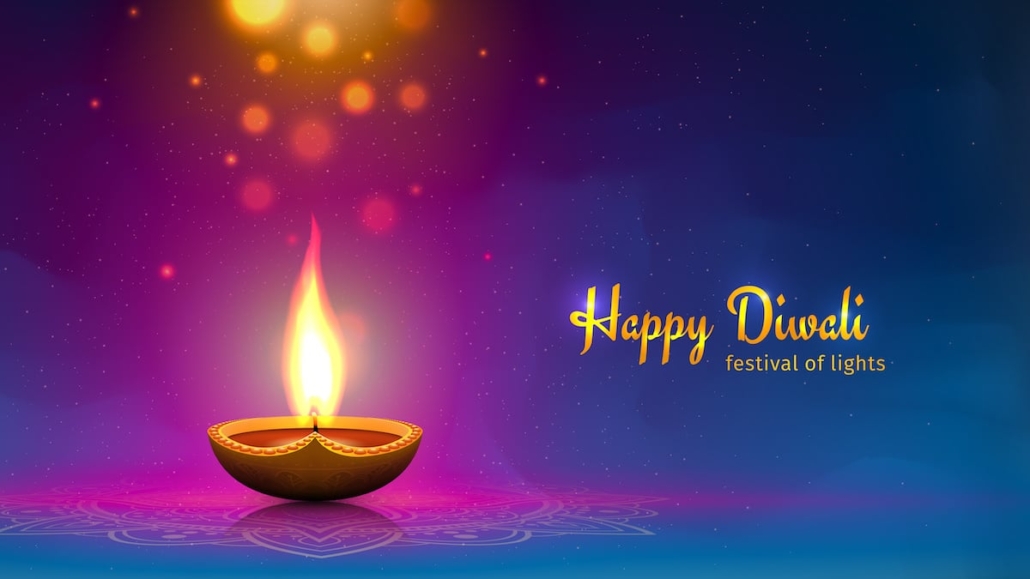
Today, Hindus, Sikhs and Jains are celebrating Diwali.
Diwali, “the festival of lights”, deeply conveys the triumph of good over evil and profoundly symbolises new beginnings.
Diwali is a festival of colour, hope, and light.
Light symbolises harmony, knowledge, oneness, and unity.
The word Diwali is derived from the Sanskrit word Deepavali, which means “rows of lighted lamps”
At this time: lights, called Diya lamps, are lit; homes are cleaned; new clothes are worn; prayers are said. It is time for community, family and giving. Outside their homes, people draw Rangolis. These are traditional designs made using colourful powders and are said to bring good luck and positivity. A “black and gold” rangoli is reproduced above.
In Hinduism, the iconic and inspirational story of Prince Rama and Princess Sita is at the very heart of Diwali. Rama and Sita, with the help of Hanuman, the monkey King, defeated evil. As Rama and Sita returned home, after enforced exile, and the captivity of Princess Sita, beautiful lights were lit, representing the triumph of goodness over evil. Many Hindus also remember Lakshmi, the goddess of good fortune and prosperity, and the “inner wealth” of love, compassion and forgiveness, and the victory of Lord Krishna over evil
In Sikhism, The Golden Temple in Amritsar, Punjab, India, is lit with lamps. Diwali remembers how Sikh leaders have supported freedom and equality, particularly the sixth Guru, Guru Hargobind. Sikhs stress the importance of fairness for all people. Bhai Mani Singh, who transcribed the final version of the Guru Granth Sahib, the central holy book of Sikhism, is also remembered.
In Jainism, Diwali remembers the moment the founder of the faith, Lord Mahavira, and his soul, reached a state of being known as Moksha, Nirvana, or eternal bliss.