

House System
The importance of the House System at TBSHS reflects the emphasis that the school places upon extra-curricular involvement and competition leading to excellence in all areas.
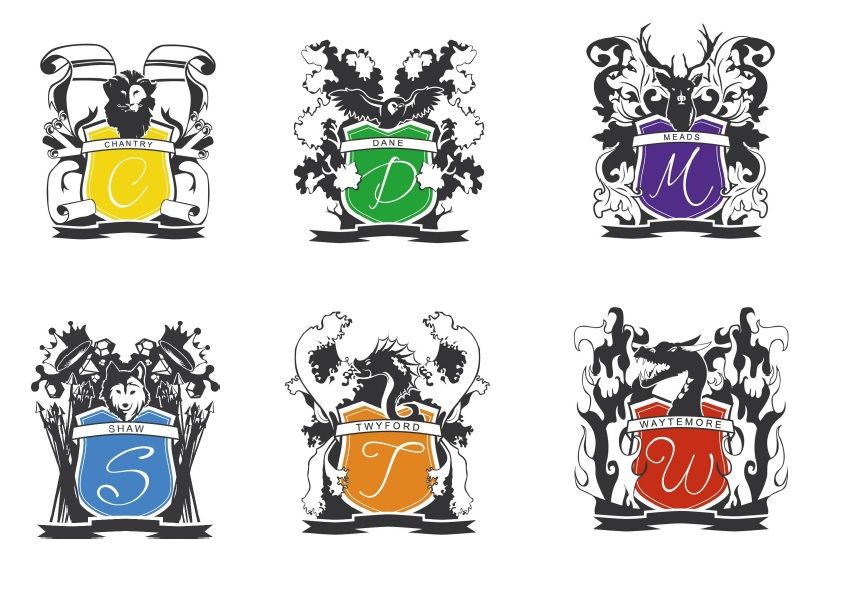
When your son or daughter joins The Bishop’s Stortford High School they will be placed in one of six houses: Chantry, Dane, Meads, Shaw, Twyford and Waytemore. Every House has members from Year 7 to the Sixth Form. Each House is led by a Head of House, assisted by the House president, who is selected from the year 11 members as well as a Form Captain. The House system is an important way in which students can immerse themselves in the life of the school outside of lessons, and also take on important roles of responsibility.
Students in each house can earn house points for going above and beyond expectations with classwork, homework or simply having impeccable manners. All these points go together along with all the varied events to determine who will lift the coveted house cup at the end of the year.
Events are varied to allow every student to get involved in participating as well as supporting their peers. They range from sports which include rugby, and football, dodgeball and chess to house drama, where students write, direct and produce their own plays. The Music Festival held every spring term that sees a whole range of musical talent take to the stage, whilst in the summer term we have the debating finals, to summarise a year of debating. New recent events include the spelling bees in English and MFL (Modern Foreign Languages), to build on literacy, and the popular House Darts. Of course, the year is rounded off by sports day, which is a great day of sporting excellence as well as determination and endeavour by many students.
The House System is at the heart of the school, encouraging students to go beyond and above in the spirit of friendly competition.
Mr J Blake
Head of House System
Email: james.blake@tbshs.org
House Events Calendar 2025-26
Autumn Term
House Rugby – Late September
Spelling Bee – Oct/Nov
House Table Tennis – Oct/Nov
Pumpkin Carving – October
Christmas Card competitions – December
Spring Term
Chess – Start of January
Music Festival – Feb/March with an evening finale concert
House Darts – February House Dodgeball – End of March House Football – End of March House Photography Competition – Easter holidays
Summer Term
House Debating finals – April MFL Spelling Bee – April / May
House Tug of War – May House Drama – May House Quiz – June/July
Our Houses
Ever wondered how our TBSHS Houses got their names? Read on, to find out about Chantry, Dane, Meads, Shaw, Twyford and Waytemore.
The Chantry
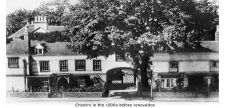 The Chantry was a chapel, founded in 1490 by a local woman to house a priest to say Mass in memory of her husband.
It was dissolved and demolished on the orders of Henry VIII and his commissioners (1536-41).
Rebuilt by 1560, it became a private residence of prominent and wealthy people.
It now houses some local shops and businesses with a private residence behind the archway.
Margaret Dane
 William and Margaret Dane bequeathed large sums of money to the poor of Bishop’s Stortford.
William Dane was born and raised in Bishop’s Stortford.
Upon Margaret’s death in 1579 she left £5 a year to help fund a school in Bishop’s Stortford.
A school was built in the late 1600’s following the civil war.
This original school closed in 1929, but Birchwood High School was formerly called Margaret Dane School.
The Meads
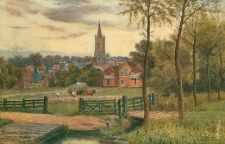 The history of the word ‘Mead’ means meadow, from Old English and Old Germanic.
This includes large areas of pasture and fields that are open for animals, especially deer.
Bishop’s Stortford has many areas associated with this name, including modern housing developments on what was Meads land.
Large areas are protected for the enjoyment of townsfolk.
Ian Shaw
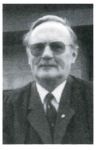 Mr Shaw was headteacher of the Bishop’s Stortford High School from 1980 to 1998.
He was responsible for transforming the school and building its reputation.
He believed that all students should have access to extra-curricular opportunities, social and international trips.
Twyford
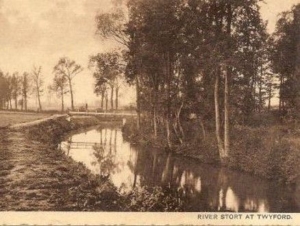 Meaning two fords, once used to cross the river Stort and a small stream that had its origins in Birchanger.
It is a small hamlet that is incorporated into the much larger Thorley and contains a few dwellings.
Records of a mill on the River Stort at Twyford go back as far as the 1086 Domesday Book. Agricultural mills powered by waterwheels could be found along the length of the River Stort. Twyford Mill was a ‘provender’ mill that converted farm produce such as grain, peas and beans into animal feed.
Twyford House still sits near the river and was briefly a maternity hospital during World War II.
Waytemore Castle
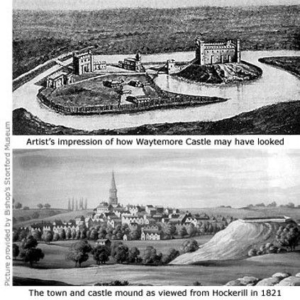 Built by the Normans in 1070’s.
It was first owned and occupied by the Bishop’s of London, thus Bishop’s Stortford getting its full name.
The castle played an active role in the Anarchy of civil war between King Stephen and Empress Matilda in 1100’s.
The castle was seized by King John during an argument with the pope and Bishop’s and torn down in 1208.
The castle was rebuilt by King John by order of the pope a few years later.
It was finally torn down during the reign of Queen Elizabeth I.
House Events
Over the course of the year there are various sporting and non-sporting events for students to take part in to earn house points.
These include, Rugby, Football, Tug of War, Dodgeball, Drama, Music, English Spelling Bee, MFL Spelling Bee, Quiz, Cricket, Chess, Debating and more.